The essentials
Key takeaways
- The air gap separates the rotor surface from the stator bore.
- Clearance must balance magnetic performance, cooling and movement.
- Measurement results need machine-specific limits and context.
Overview
The clearance between the rotor and stator is an important part of generator design. It connects electromagnetic performance with alignment, vibration, thermal growth and cooling.
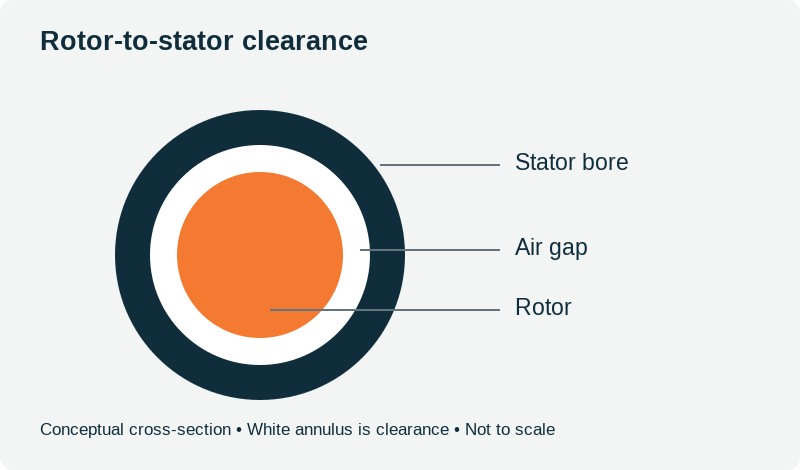
The air gap is the non-magnetic clearance between the rotor surface and stator bore. Its dimensions are machine-specific; there is no universal clearance that suits all generators.
High-speed turbogenerators require control of rotor position and mechanical clearances. The significance of a measured change must be assessed against the machine design, measurement uncertainty and operating conditions.
So, why does the air gap matter so much? That’s what this article digs into—how it works, what can go wrong, what it means for the environment, and why new tech is changing the game for air gap management in power plants.
What Is the Generator Air Gap?
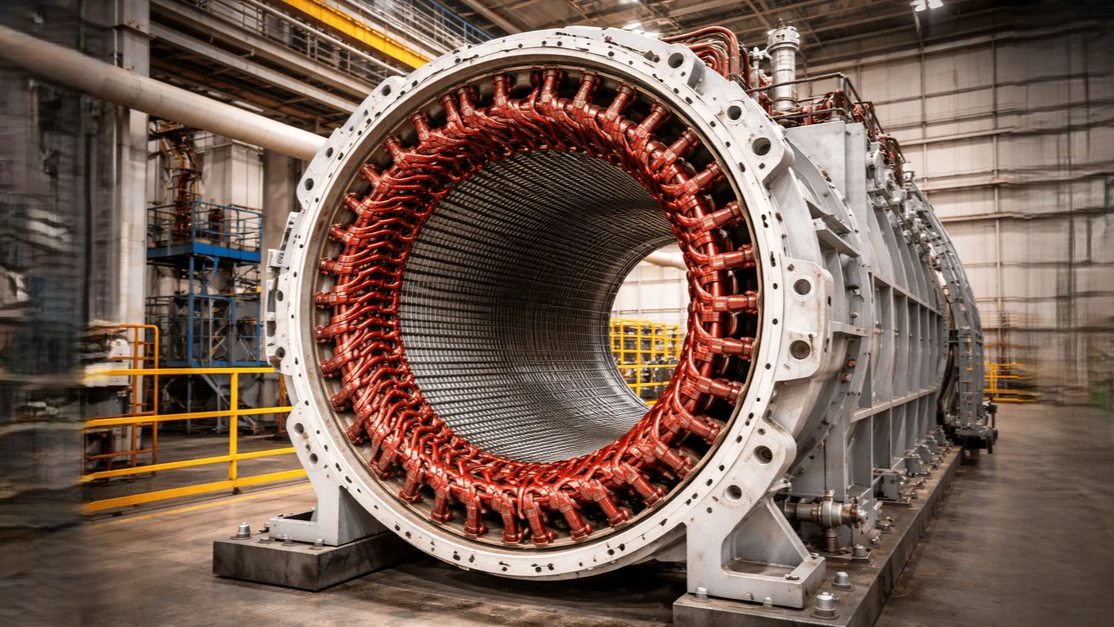
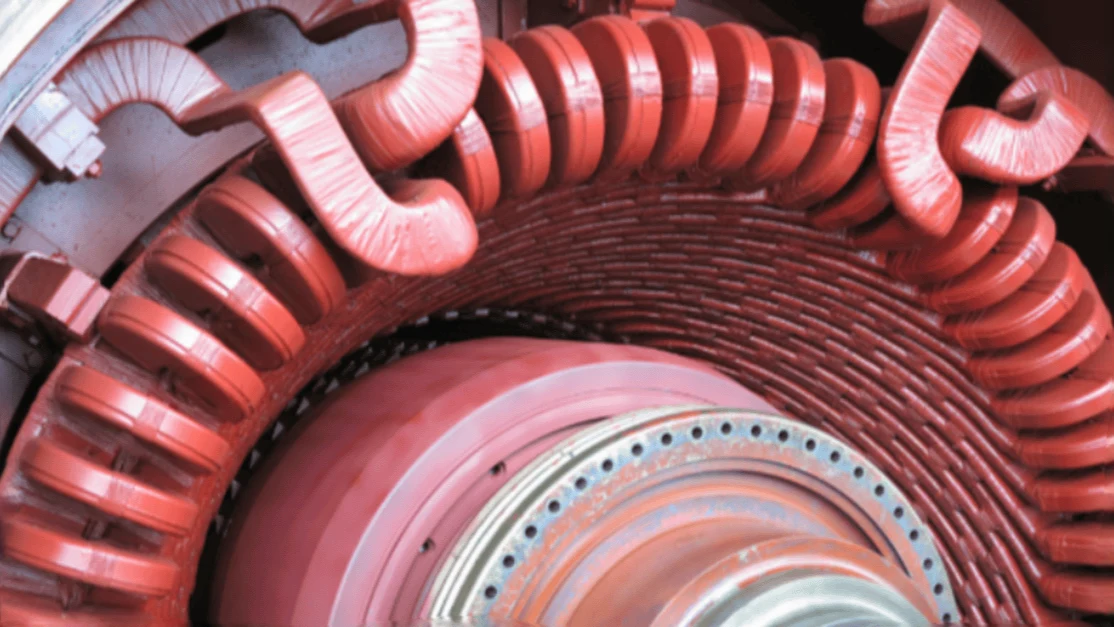
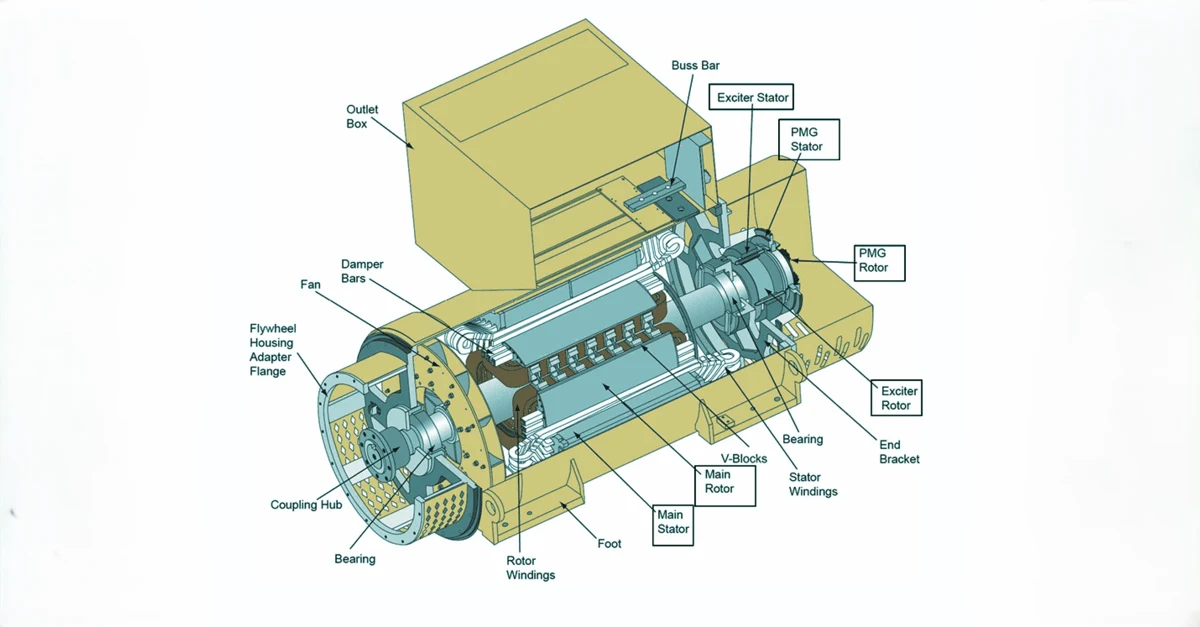
In a conventional inner-rotor generator, the rotor turns inside the stationary stator bore. The air gap separates their surfaces and contains the cooling gas specified for the machine.
Air and hydrogen are used in different generator designs. Hydrogen and air must not be deliberately mixed for cooling: their mixture can be flammable. Gas changes require the approved OEM purging procedure and its specified inert buffer gas.
Electromagnetically, the air gap contributes a substantial part of the magnetic-circuit reluctance because its permeability is much lower than that of the laminated iron. Its size and uniformity therefore influence magnetizing requirements, flux distribution, synchronous reactance, voltage regulation and unbalanced magnetic pull. A smaller gap can reduce magnetic reluctance and may reduce the excitation required for a specified flux under otherwise comparable design conditions, but it does not automatically improve overall generator efficiency. The final design is a compromise among electromagnetic performance, rotor dynamics, mechanical clearances, cooling-flow requirements, manufacturing tolerances and fault withstand capability.
On the mechanical side, the air gap sets the limit for how much the rotor can move under all sorts of running conditions. At top speed, the rotor expands because of heat and centrifugal force. Add in play from the bearings, shaft bending, vibrations, and sudden events like startup or faults, and the rotor can move around a fair bit. The air gap has to be big enough to handle all that, so the rotor never scrapes the stator. One hard contact and the machine could be wrecked.
Keeping the air gap even all the way around is just as critical. If the gap isn’t uniform, you get uneven magnetic pulls, more vibration, weird loads on the bearings, hot spots, and long-term fatigue that can eventually break things down. That’s why modern generators use precise manufacturing, careful alignment, and non-stop monitoring to keep the air gap just right, year after year.
The final clearance balances magnetic loading, cooling flow, mechanical movement and fault conditions. Changing it is an engineering design decision, not a routine efficiency adjustment.
Electromagnetic Importance of the Air Gap
The air gap has a direct influence on magnetic flux distribution and excitation requirements.
Smaller Air Gap
- Lower magnetic reluctance
- Magnetic flux density depends on excitation and the complete magnetic circuit.
- Voltage regulation also depends on machine reactances and excitation control.
- Excitation demand may decrease for comparable magnetic loading.
- Potential reduction in excitation requirement for a specified magnetic loading; overall efficiency still depends on total electrical, magnetic, mechanical and auxiliary losses.
Larger Air Gap
- Increased magnetic reluctance
- Higher field current demand
- Flux density depends on the full design and operating point.
- A larger gap can increase magnetic reluctance and excitation demand for a comparable flux design; the effect on total efficiency is machine-specific and cannot be inferred from gap size alone.
Pushing the air gap too small is risky. If you make it too tight, the machine gets way more sensitive to things like rotor wobble, worn bearings, heat expanding the parts, or even tiny mistakes in manufacturing. So, when you’re designing the air gap, you’re always balancing how efficient you want the machine to be against how safe and reliable it stays.
Unbalanced Magnetic Pull (UMP): A Silent Threat
One of the biggest headaches from an uneven air gap is Unbalanced Magnetic Pull, or UMP. This happens when the air gap gets lopsided because of things like:
- Rotor eccentricity
- Bearing degradation
- Shaft deflection
- Foundation settlement
- Thermal bowing of the rotor
the magnetic forces acting on the rotor become asymmetrical. This results in a net radial force pulling the rotor toward the stator.
The effects include:
- Increased vibration amplitudes
- Bearing overload and accelerated wear
- Shaft instability
- Risk of rotor–stator rubbing
At turbine-generator operating speeds, UMP can escalate extremely fast, leading to forced outages or irreversible damage if not detected early.
Rotor Dynamics and Mechanical Stability
Rotor dynamic behaviour depends on shaft stiffness, bearings, alignment, electromagnetic forces and operating speed. Air-gap asymmetry can interact with these factors.
- Rotor centring
- Dynamic stiffness
- Stability margins
- Vibration response during load changes
Air-gap measurements are useful during installation and relevant maintenance work, where specified in the approved inspection plan:
- Generator erection
- Major overhauls
- Bearing replacement
- Shaft alignment corrections
Measurements at specified circumferential and axial positions help assess concentricity; acceptance limits and methods are machine-specific.
Thermal Performance and Cooling Efficiency
In high-capacity generators, the air gap also acts as a cooling flow passage.
Its geometry affects:
- Hydrogen or air flow distribution
- Heat removal from the rotor surface
- Windage losses
- Overall thermal balance
Insufficient clearance may create:
- Restricted local cooling passages, depending on the design
- Rotor surface temperature increases
- Local hot spots can form
A change in gap geometry may also alter:
- Cooling-flow distribution
- Windage losses
- Electromagnetic loading
Cooling performance must be evaluated together with the complete ventilation circuit and machine clearances.
Advantages of Proper Air Gap Design and Control
When the air gap is correctly designed, assembled, and monitored, the benefits are significant:
- Controlled electromagnetic and thermal performance
- Improved voltage regulation
- Lower vibration and noise
- Reduced bearing and insulation stress
- Enhanced mechanical stability
- Longer service life
- Fewer forced outage
In high-capacity power plants, these advantages directly translate into higher availability and lower lifecycle costs.
Limitations and Practical Challenges
Despite its importance, maintaining an ideal air gap is challenging due to real-world constraints:
- Manufacturing tolerances in rotor and stator cores
- Stator ovality and core deformation
- Shaft straightness and thermal bow
- Bearing clearances and wear
- Foundation movement over time
There is no universally “ideal” air gap. Each generator design requires optimization based on electrical performance, mechanical robustness, cooling needs, and long-term operational safety.
Environmental Impact of Air Gap Optimization
- While often overlooked, air gap optimization contributes meaningfully to environmental sustainability.
- Improved efficiency reduces fuel consumption
- Lower electrical losses mean reduced CO₂ emissions
- Stable operation minimizes emergency shutdowns and inefficient restarts
- Extended equipment life reduces material usage, manufacturing energy, and waste
Any environmental benefit depends on demonstrated changes in losses, operating hours and the plant energy source.
Global Significance in Power Generation
Across the world, generator air gap integrity is a shared engineering concern, regardless of plant type:
- Thermal and coal-fired power stations
- Combined-cycle gas turbine (CCGT) plants
- Nuclear power plants
- Large hydroelectric generators
Utilities depend on air gap integrity for grid reliability. OEMs optimize it for performance and safety. EPC contractors control it during erection and alignment. O&M teams monitor it to prevent unplanned outages.
A major generator outage can reduce available capacity; its system impact depends on grid conditions and reserves.
Measurement and Monitoring Practices
Offline Measurement
- Feeler gauges
- Dial gauges
- Mechanical probes
- Air gap mapping during shutdowns
Online Monitoring
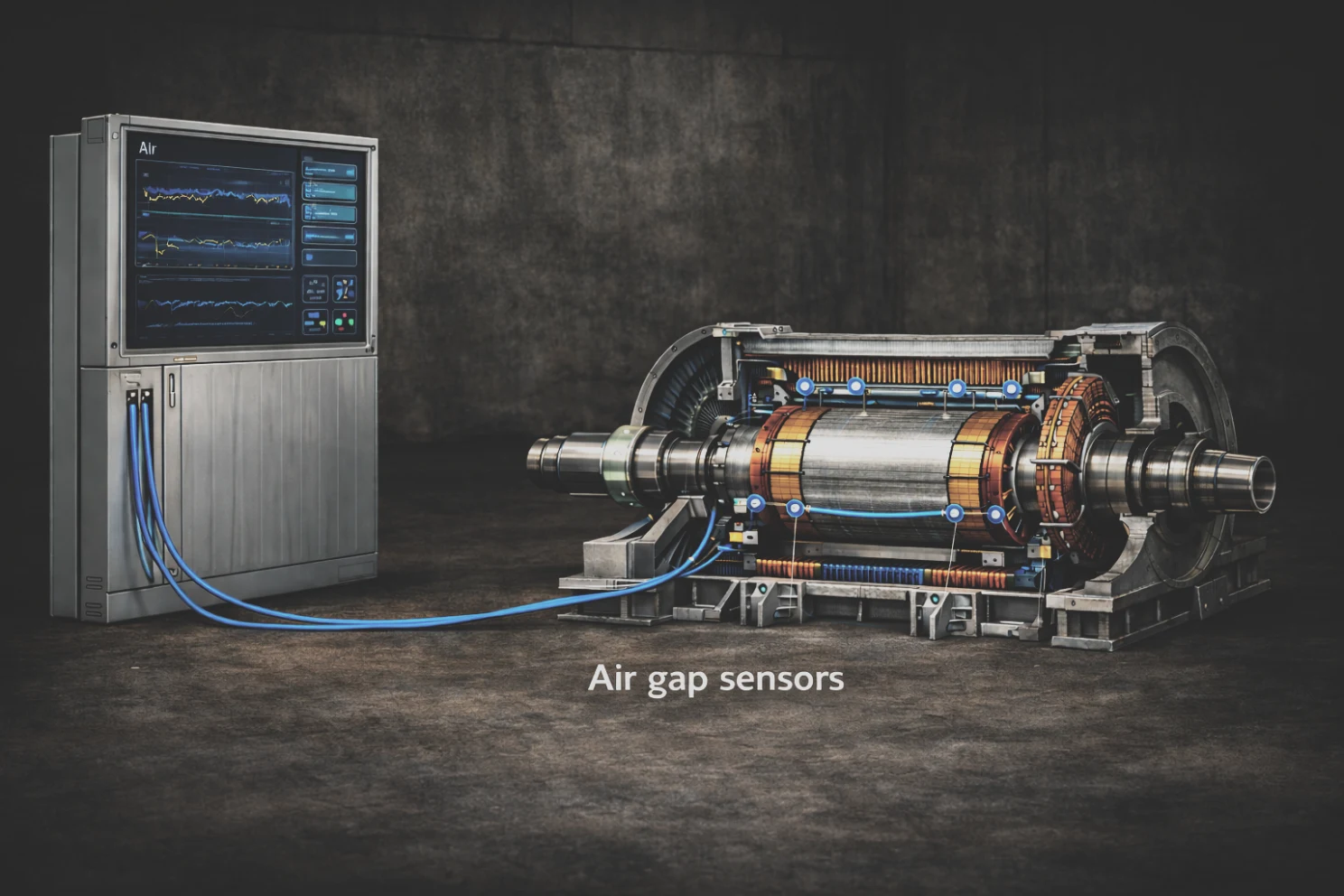
Where suitable sensors are installed, online monitoring can help track:
- Rotor eccentricity
- Thermal growth
- Dynamic movement during operation
Online monitoring enables:
- Early fault detection
- Predictive maintenance
- Earlier investigation of abnormal rotor movement
Air gap monitoring is shifting from a maintenance check to a real-time diagnostic parameter.
The Future: Digitalization and Predictive Intelligence
Future developments include:
- Digital twins of generator air gaps
- AI-driven vibration and eccentricity analytics
- Predictive maintenance models
- Integration with plant-wide condition monitoring systems
These tools can support earlier investigation when their models and data are validated. They do not replace protective systems or engineering assessment.
Air-gap integrity deserves attention throughout design, assembly and service. Its value is in maintaining the machine within verified electrical, mechanical and thermal limits.
A closer look
Explore the air gap
Select a topic below to see its role in the complete system.
Magnetic circuit
The gap contributes magnetic reluctance and influences excitation requirements and flux distribution.
Mechanical clearance
The design allows for alignment, vibration, bearing condition and thermal movement.
Monitoring
Specified measurements and suitable sensors can identify changes that warrant investigation.
Common questions
Is a smaller gap always better?
No. Reducing clearance can compromise mechanical movement and cooling. It is a coordinated design choice.
Can air and hydrogen be mixed to improve cooling?
No. Hydrogen-air mixtures can be flammable. Use the specified cooling medium and approved OEM gas-handling procedure.
Further reading
Technical background for the principles discussed. Equipment-specific instructions take precedence.
Discuss your equipment requirements
Share the equipment details, operating concerns and available inspection records with our team.