The essentials
Key takeaways
- Geometry alone does not establish functional equivalence.
- Materials, operating loads and manufacturing processes matter.
- Validation and applicable legal obligations belong in the project scope.
Introduction
Reverse engineering is often misunderstood in modern engineering and manufacturing. While some view it as merely a process of replicating an existing design, others recognize it as a systematic engineering approach that can support learning, innovation, equipment reliability and technological advancement.
The debate is especially relevant in industries where equipment must remain safe and operational despite ageing assets, discontinued products or limited access to original design information. Is reverse engineering a boon or a bane? The answer depends on the purpose, the methods used and the care taken to validate the results.
What Reverse Engineering Really Involves
At its core, reverse engineering is the process of examining an existing product, component or system to understand its design, construction, materials and performance. It may involve determining:
- How the component is designed and manufactured
- Why particular materials and manufacturing processes may have been selected
- How individual parts fit and function together
- How the product performs under its intended operating conditions
Effective reverse engineering goes beyond copying visible dimensions. It seeks to understand the engineering decisions behind a design, including cost, performance, safety factors, thermal behaviour, structural integrity, manufacturing constraints and expected service life.
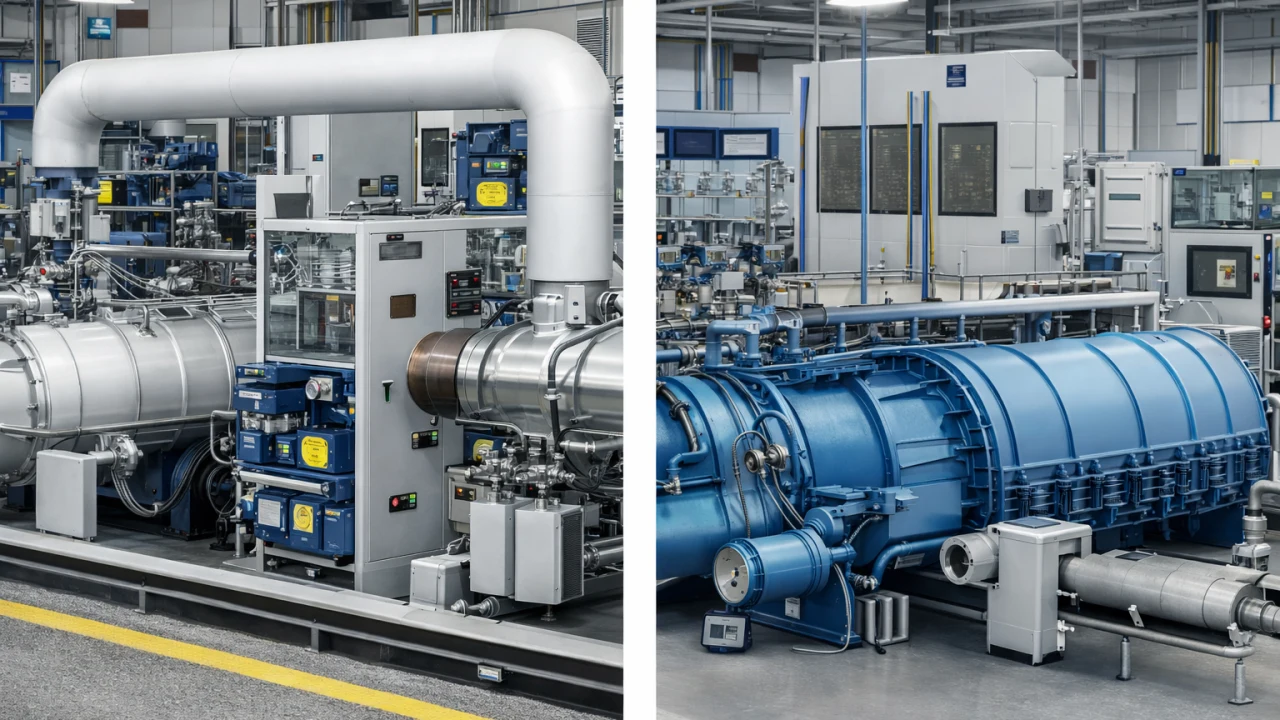
In sectors such as power generation, heavy equipment, aerospace and process industries, this work can be important when original drawings are unavailable or equipment support has been discontinued.
Why Reverse Engineering Matters
Many industrial assets were designed decades ago. Original drawings may be missing or incomplete, manufacturers may no longer support the equipment, and replacement parts may be difficult to source, costly or subject to long lead times.
In these circumstances, reverse engineering can help engineers understand legacy equipment, develop replacement components and support the continued operation of plants and infrastructure. The objective should be to restore or improve function safely—not simply to reproduce a shape.
Key Benefits of Reverse Engineering
Faster, More Informed Learning
Studying a component that has operated in real conditions can reveal valuable information about design choices and service behaviour. Engineers may learn about:
- Design clearances and tolerances
- Material response to stress, heat and repeated loading
- Manufacturing limitations and process effects
- Common wear patterns and potential failure locations
When combined with sound analysis, this practical learning can strengthen engineering judgement and help teams make better-informed design decisions.
Extending Equipment Life
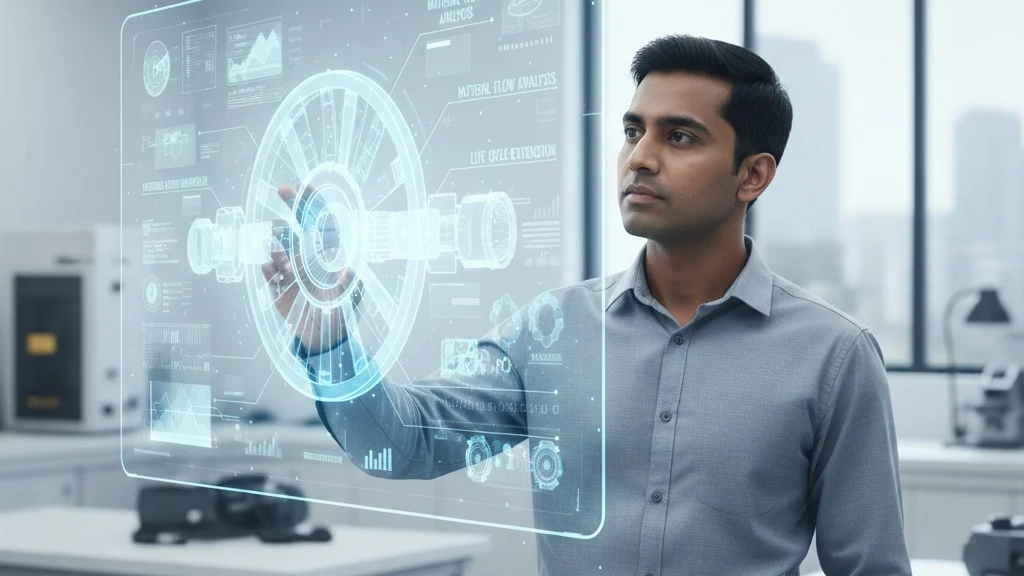
For power plants and manufacturing facilities, extending the useful life of existing equipment can be an important operational priority. Reverse engineering may help teams:
- Develop replacement parts when original components are obsolete or unavailable
- Assess worn components for repair or refurbishment
- Evaluate upgrades using suitable materials or manufacturing processes
Any replacement or modified component must be assessed for fit, function, material suitability and operating loads. Appropriate inspection and validation are essential before it is returned to service.
Saving Time and Managing Costs
Developing a complex component entirely from scratch can be time-consuming and uncertain. An existing component can provide a useful starting point for investigation and design development. This may reduce uncertainty, shorten development cycles and help manage costs—particularly where unplanned downtime has significant operational and financial consequences.
Strengthening Local Manufacturing Capability
Understanding imported or legacy equipment can help local engineering and manufacturing companies develop solutions suited to regional operating conditions and requirements. Where legally permitted and technically justified, this can strengthen supply-chain resilience, reduce dependence on distant sources and build local industrial capability.
Supporting Innovation
Reverse engineering does not have to limit creativity. A thorough understanding of an existing design can provide a foundation for meaningful improvement. Depending on the application, engineers may be able to:
- Refine geometry to improve efficiency
- Evaluate alternative materials
- Improve cooling, strength or durability
- Reduce weight, manufacturing cost or maintenance requirements
The aim is not to reproduce a design without question, but to use engineering insight to develop a solution that is better suited to its intended purpose.
Risks and Challenges
Blind Copying Without Understanding
A component that looks identical to the original may not perform in the same way. Material grade, heat treatment, residual stresses, surface finish and manufacturing processes can all affect performance. Reproducing external dimensions without understanding these factors can lead to premature failure or damage to connected equipment.
Safety and Reliability Risks
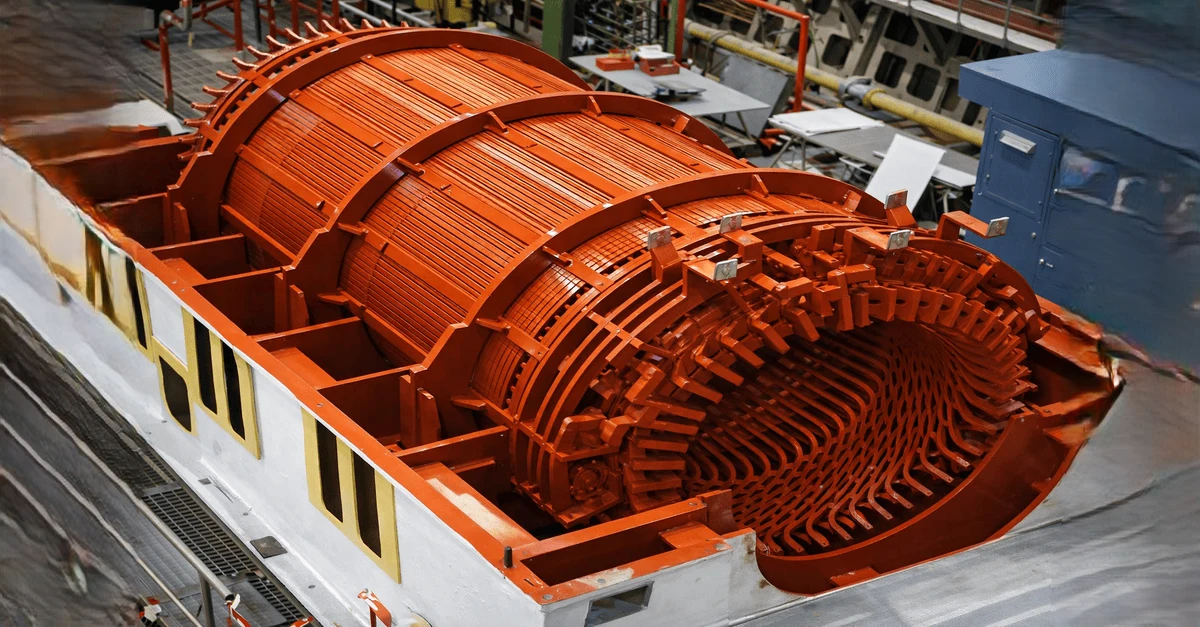
In turbines, generators, pressure systems and other safety-critical applications, even small design changes can have serious consequences. Reverse-engineered components should therefore be subject to appropriate engineering analysis, risk assessment, inspection, testing and validation. Dimensional similarity alone is not proof of functional equivalence.
Intellectual Property and Legal Considerations
Reverse engineering can raise questions involving patents, copyright, trade secrets, contracts and other intellectual-property rights. It is not automatically lawful or unlawful in every situation; the position depends on the jurisdiction, the rights involved, contractual restrictions and the specific activities undertaken. Organizations should obtain appropriate legal guidance and respect applicable obligations before proceeding.
Risk of Weakening Innovation
Over-reliance on copying can reduce investment in original research and design capability. If engineers focus only on reproducing existing solutions, organizations may miss opportunities to develop new approaches and respond to changing technologies. Reverse engineering should complement—not replace—independent engineering and innovation.
A Responsible Engineering Approach
A disciplined reverse-engineering process should be based on evidence, engineering judgement and documented validation. Depending on the component and its criticality, the work may include:
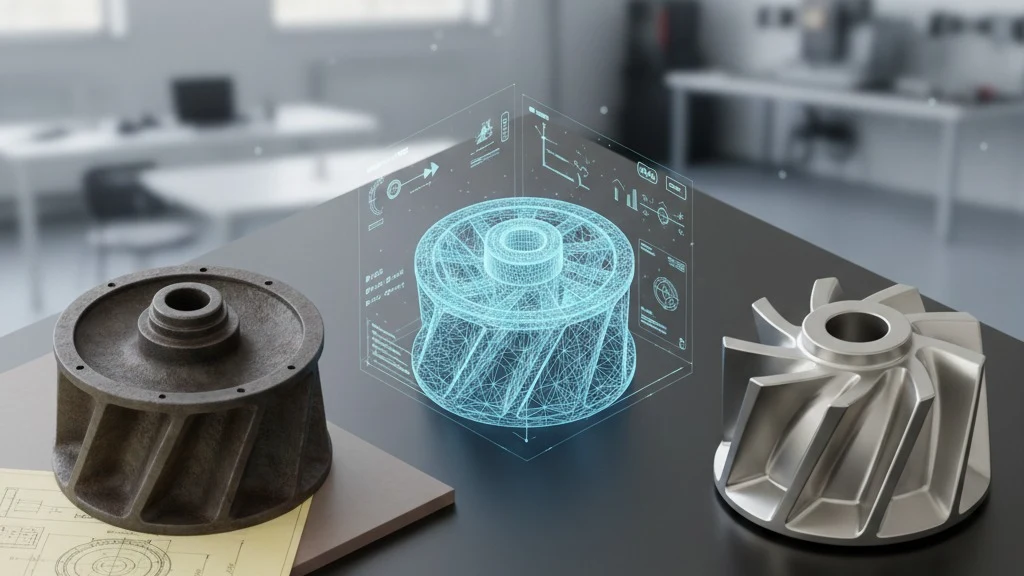
- Inspecting and accurately measuring the component, using suitable metrology or 3D scanning where appropriate
- Developing CAD geometry and documenting design assumptions
- Identifying materials and, where necessary, evaluating their properties and condition
- Reviewing loads, operating conditions, tolerances and likely failure mechanisms
- Using calculations or simulation to assess design behaviour
- Manufacturing prototypes or replacement parts under controlled processes
- Inspecting, testing and validating the finished component before use
- Reviewing applicable legal, contractual, safety and quality requirements
The depth of analysis and testing should be proportionate to the component’s function, operating environment and potential consequences of failure.
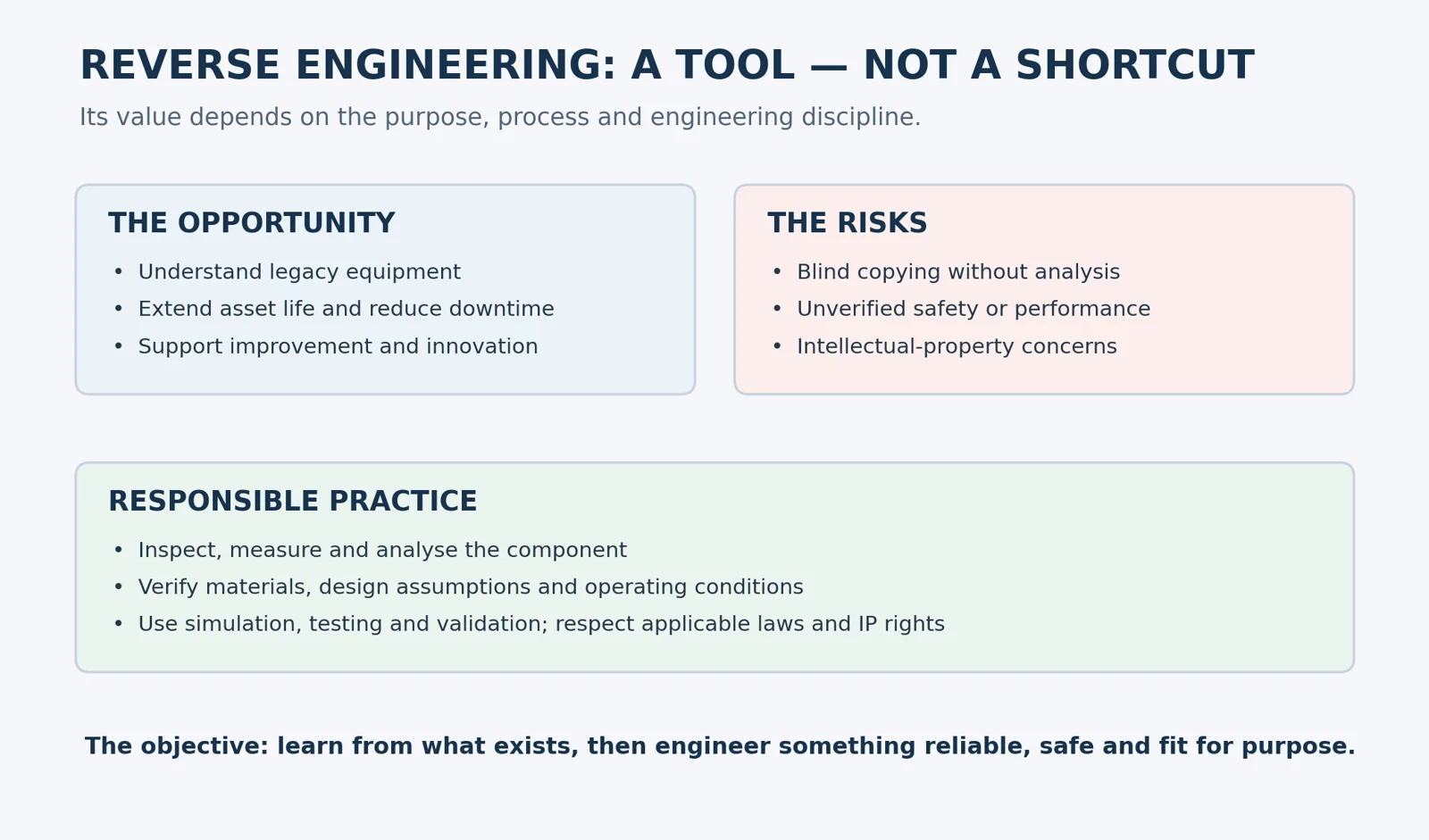
A Balanced Perspective: Boon or Bane?
Reverse engineering is neither inherently good nor inherently bad. Used responsibly, it can deepen technical understanding, extend equipment life, support local capability and create opportunities for improvement. Used carelessly, it can introduce safety and reliability risks, create legal exposure and discourage original design work.
The distinction lies in the quality of the engineering process: understanding before reproducing, analysis before modification, and validation before deployment.
Conclusion
In today’s industrial landscape, reverse engineering can be a valuable tool for addressing legacy-equipment challenges and developing practical engineering solutions. Its greatest value comes not from copying what already exists, but from understanding why it works, identifying where it can be improved and verifying that any new solution is safe and fit for purpose.
Organizations that combine careful investigation with sound engineering analysis, respect for intellectual-property rights and continued investment in innovation can use reverse engineering to support more reliable and capable industrial systems.
A closer look
Explore the key principles
Select a topic below to see its role in the complete system.
Investigate
Measure the component and establish its material, condition, interfaces and intended function.
Analyse
Document assumptions, model the relevant loads and assess proposed changes.
Validate
Inspect and test the manufactured result against agreed requirements before use.
Common questions
Is reverse engineering just copying dimensions?
No. It includes understanding materials, tolerances, function and manufacturing effects.
Does a matching shape prove a part is suitable?
No. Suitability also depends on properties, loads, manufacturing quality and validation.
Further reading
Technical background for the principles discussed. Equipment-specific instructions take precedence.
Discuss your equipment requirements
Share the equipment details, operating concerns and available inspection records with our team.