The essentials
Key takeaways
- Electrical and mechanical losses become heat that cooling must remove.
- Air, hydrogen and water arrangements have overlapping application ranges.
- Separate cooling circuits and auxiliaries must match the OEM design.
Need of Generator Cooling
Generator cooling is required for the following reasons.
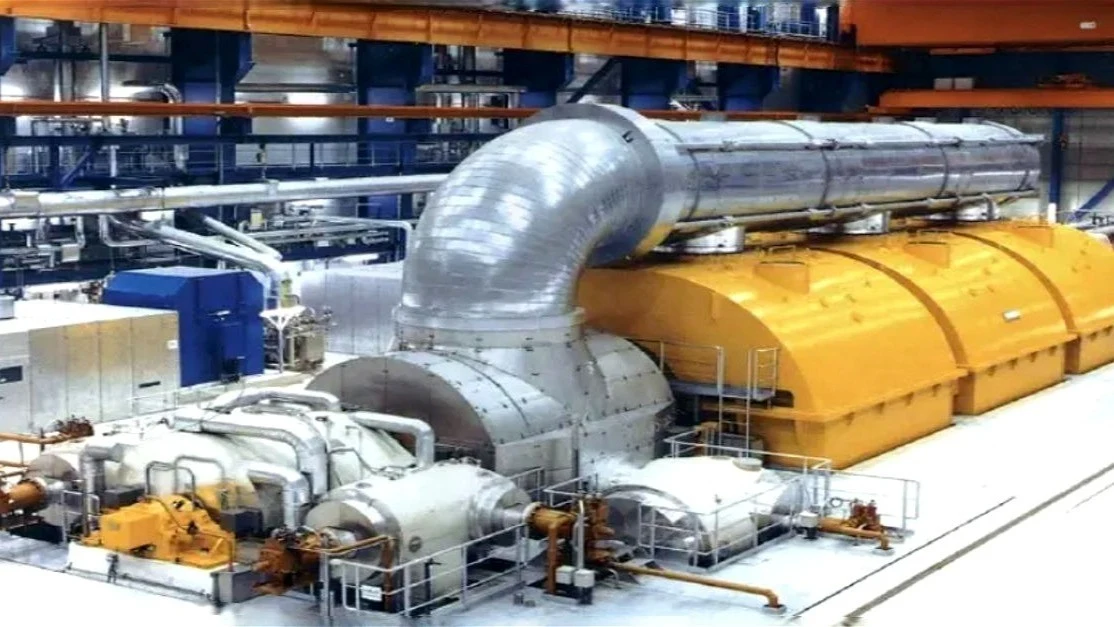
Nowadays generators are built with higher capacities. The largest generators used in major power stations are usually turbo-generators. They operate at high speeds and are usually coupled to a steam or gas turbine.
Current flows in the stator armature winding and, in an electrically excited synchronous generator, in the rotor field winding. Resistive (I²R) losses in these windings produce heat. The alternating magnetic flux in the stator core produces core losses, principally hysteresis and eddy-current losses; additional stray-load and mechanical losses also contribute to the generator heat load.
Excessive temperature can accelerate insulation ageing and contribute to electrical or mechanical damage.
Cooling removes losses as heat and helps keep components within their specified thermal limits. It reduces overheating risk but does not eliminate every failure mechanism.
Generator Stator and Rotor windings
Stator Windings
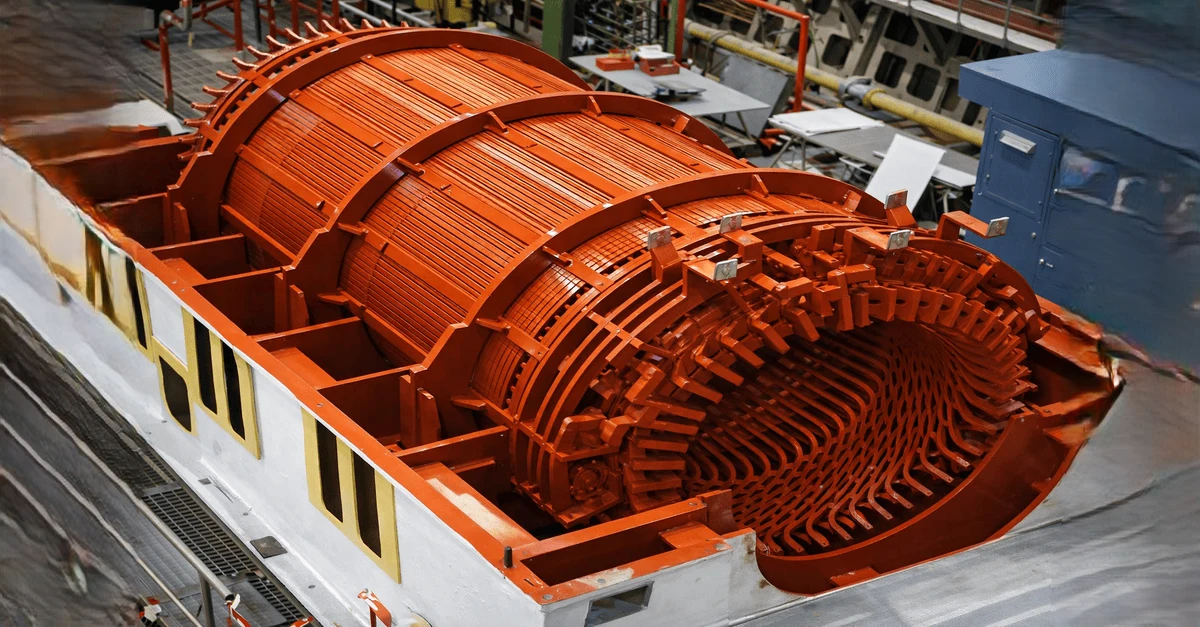
Stator windings are located in slots in the core. Direct water-cooled designs use hollow conductors; other designs use different conductor and cooling arrangements.
Rotor Windings
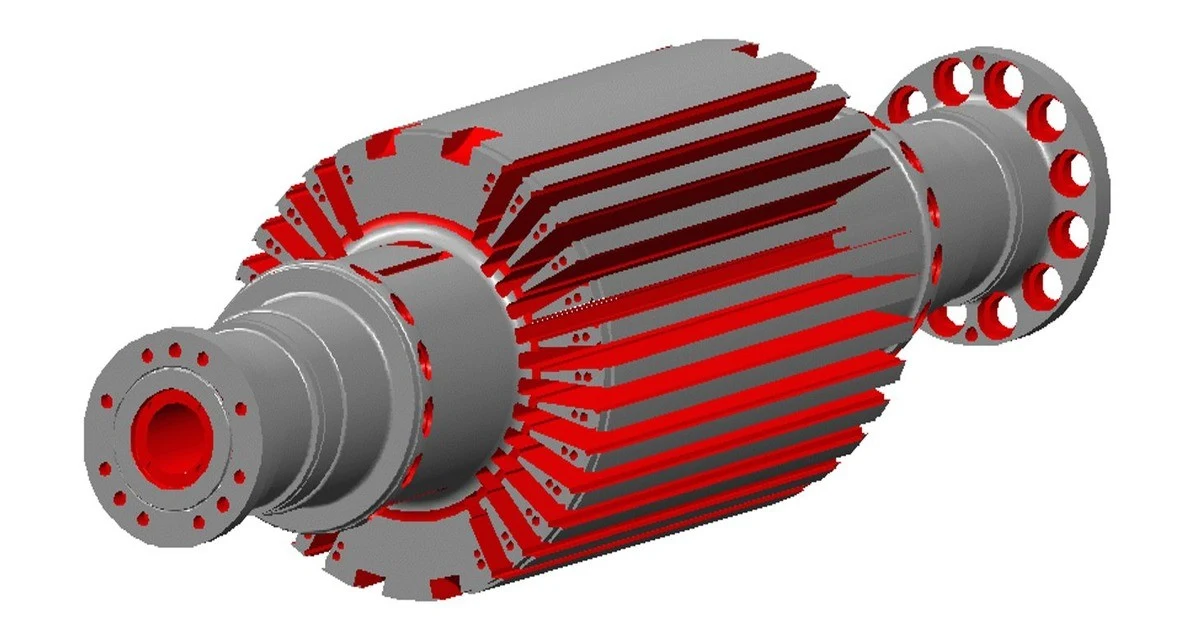
The rotor is made from solid steel for strength, and the field or excitation windings are embedded in rotor slots.
Types of Generator Cooling
- 1. Air cooling
- 2. Water cooling
- 3. Hydrogen cooling
Based on the method of cooling the construction features of the generators also varied.
Air Cooling Generator
These are available in two combinations.
i. Open Ventilated Air Cooled
An open-ventilated system draws filtered ambient air through the machine and releases the warmed air to the surroundings. Filtration and ambient conditions affect its performance.
ii. Totally Enclosed Water to Air Cooled-TEWAC
In the TEWAC design, the air is circulated within the generator, passing through frame-mounted air to water heat exchangers.
The internal air is recirculated rather than exchanged with the atmosphere. The heat exchanger transfers its heat to a separate water circuit.
Water Cooling Generator
Some generator designs combine direct stator-water cooling with hydrogen cooling. The choice follows the OEM thermal design rather than a universal rating threshold.
Water Cooled Stator
In a directly water-cooled stator, a closed-loop system supplies high-purity water through hollow conductor passages.
Stator Cooling Water System is a closed-loop auxiliary system that supplies high purity water to the generator windings to remove heat generated by electrical losses. It also maintains the temperature of the cooling water.
Hydrogen Cooled Rotor
In hydrogen-cooled rotor designs, gas flows through the passages specified by the manufacturer. Passage geometry and fan arrangements vary between machines.
Hydrogen Cooling Generator
The advantage of using Hydrogen as a cooling media is that it provides efficient cooling due to its low density and high thermal conductivity.
Hydrogen cooling can reduce windage losses and support compact designs; efficiency and size comparisons require equivalent ratings and operating conditions.
Hydrogen cooled generators use the following two auxiliary systems to maintain the gas at the required pressure and avoid gas leakage.
Gas Control System
The gas-control system manages the specified gas supply and approved gas-change arrangements. Purging and filling must follow the OEM procedure; hydrogen and air are not mixed directly for cooling.
Hydrogen Seal Oil System
The purpose of the Shaft sealing system is to provide a means of sealing hydrogen gas with the generator casing. Seals are required at each end of the generator rotor. Oil is supplied to the seal casing at a pressure higher than the hydrogen gas in the generator casing.
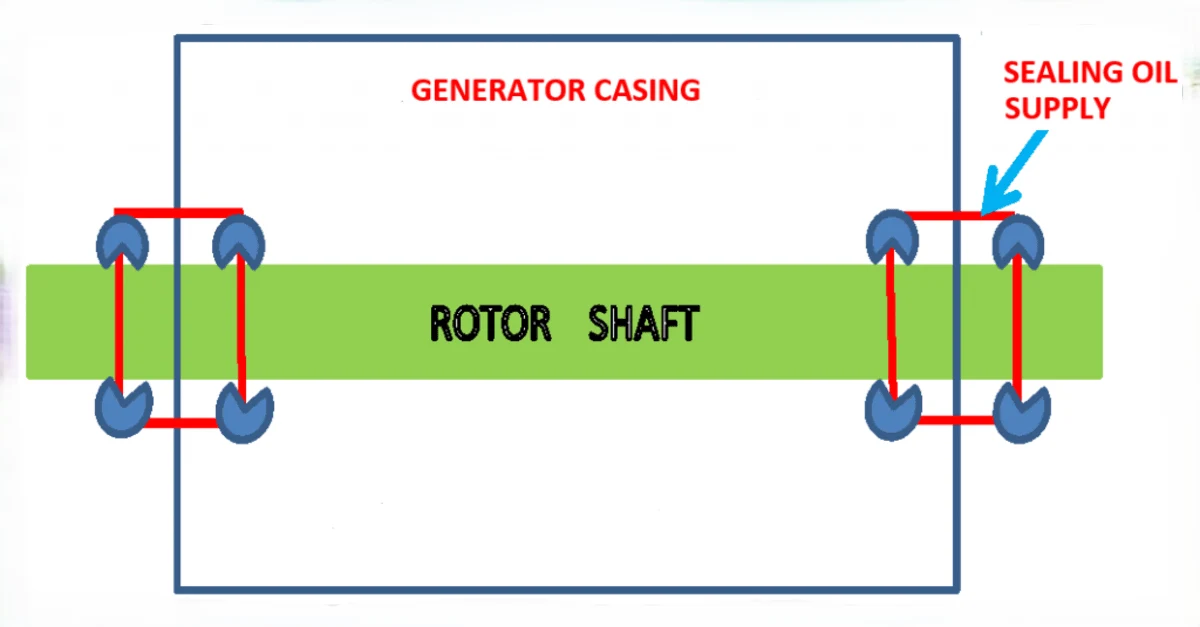
Advantages of Different Generator Cooling Methods
The selection of an appropriate cooling method for electrical generators plays a vital role in ensuring reliable operation, higher efficiency, and long service life. As generator ratings increase, thermal management becomes more critical due to increased electrical and mechanical losses. Each cooling method-air, water, and hydrogen-offers specific advantages depending on generator size, operating conditions, and application requirements.
Key advantages include:
Air Cooling Generators
- Simple construction and lower initial cost.
- Fewer gas-handling auxiliaries than a hydrogen-cooled design.
- Suitable across a design-dependent range of generator ratings.
- Open ventilated systems allow direct removal of heat using atmospheric air.
- TEWAC separates the internal circulating air from the surrounding atmosphere.
Water Cooling Generators
- Direct cooling of stator windings provides superior heat removal.
- Allows higher current density in windings, leading to increased power output.
- Water purity, leak control and electrical monitoring are essential to a direct stator-water cooling system.
- A designed flow distribution helps manage temperature differences.
- Direct stator-water cooling is used in some large-capacity generator designs where high heat flux in the stator winding requires direct conductor cooling. Its applicability is determined by the OEM design and is not defined by a universal 400 MVA rating threshold.
Hydrogen Cooling Generators
- Hydrogen’s low density reduces windage losses in the rotor.
- High thermal conductivity ensures faster and more efficient heat transfer.
- Enables compact generator design for the same power rating.
- Improves overall efficiency and operational stability.
- Suitable for high-speed turbo-generators used in large power plants.
Overall, advanced cooling methods enable generators to operate at higher ratings while maintaining thermal and mechanical integrity.
Limitations of Generator Cooling Systems
Despite their advantages, each cooling technique has certain limitations related to safety, cost, complexity, and operational requirements. These limitations influence the choice of cooling method during generator design and installation.
Major limitations include:
Air Cooling Limitations
- Limited heat removal capability, restricting generator size and rating.
- Open ventilated systems are vulnerable to dust, moisture, and environmental contaminants.
- Reduced efficiency at high ambient temperatures.
- Higher noise levels due to large air flow rates.
TEWAC System Limitations
- Higher cost compared to open air-cooled systems.
- Dependence on external water supply for heat exchangers.
- Slightly increased maintenance due to heat exchanger components.
Water Cooling Limitations
- Requires high-purity deionized water to avoid electrical conduction and corrosion.
- Risk of leakage in stator windings can cause insulation failure.
- More complex auxiliary systems increase capital and maintenance costs.
- Requires continuous monitoring of water chemistry and pressure.
Hydrogen Cooling Limitations
- Hydrogen is highly flammable, demanding strict safety procedures.
- Requires additional systems like gas control and seal oil systems.
- Initial installation cost is high due to complex sealing arrangements.
- Skilled personnel are required for operation and maintenance.
- Leakage control is critical to prevent air-hydrogen mixtures.
Global Significance of Advanced Generator Cooling
Generator cooling technologies have global significance due to their direct impact on power generation efficiency, reliability, and sustainability. As electricity demand continues to rise worldwide, especially in developing economies, efficient cooling systems enable power plants to produce more energy from the same infrastructure.
From a global perspective:
- Hydrogen and combined hydrogen-water arrangements are used in many large thermal generators. Other applications use cooling systems selected for their own design and duty.
- Efficient cooling reduces fuel consumption by improving generator efficiency, lowering greenhouse gas emissions.
- Compact generator designs enabled by hydrogen cooling reduce material usage and installation space.
- Advanced cooling systems support supercritical and ultra-supercritical power plants, which operate at very high temperatures and pressures.
- Reliable cooling supports availability by reducing overheating risk.
Future Scope and Developments in Generator Cooling
The future of generator cooling technology is closely tied to advancements in materials, monitoring systems, and sustainable power generation. With increasing emphasis on efficiency, safety, and digitalization, cooling methods are expected to evolve significantly.
Future trends and developments include:
- Adoption of advanced insulation materials capable of withstanding higher temperatures.
- Improved seal oil and gas control systems to enhance hydrogen safety.
- Integration of online temperature and condition monitoring systems for real-time diagnostics.
- Improved combinations of separate gas and water circuits where specified by the machine design.
As renewable energy integration increases, large synchronous generators will continue to play a crucial role in grid stability, making efficient cooling systems even more important.
Future generator designs will focus on achieving higher power densities, improved reliability, and safer operation while minimizing operational costs and environmental risks.
A closer look
Explore the key principles
Select a topic below to see its role in the complete system.
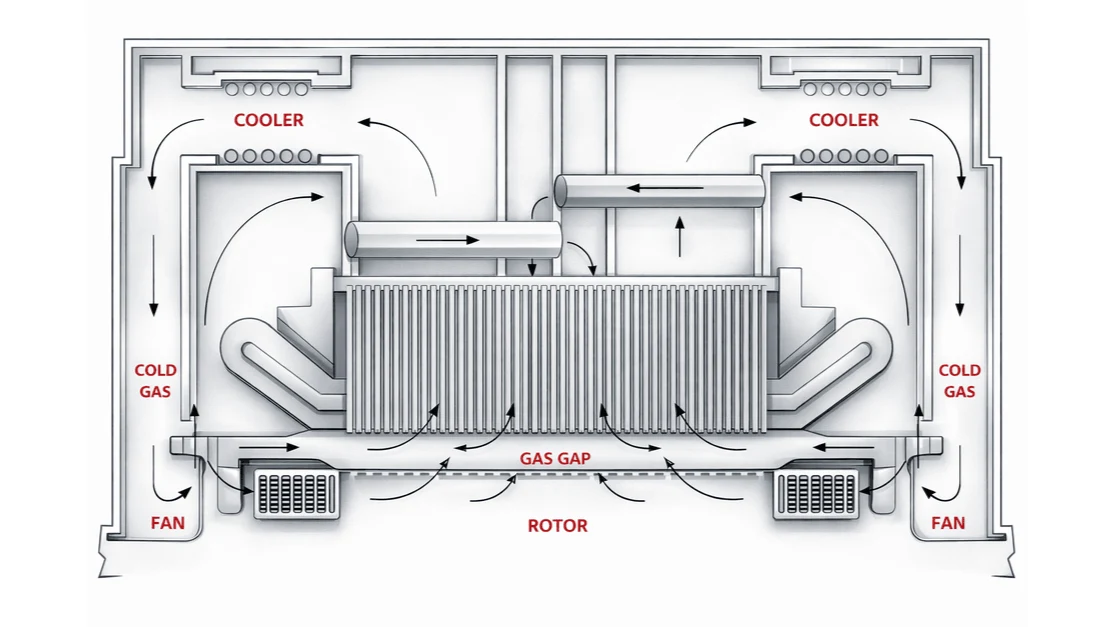
Air
Open ventilation uses ambient air. TEWAC recirculates air through a water-cooled heat exchanger.
Water
Direct stator-water cooling carries heat from hollow winding conductors into a controlled water circuit.
Hydrogen
Hydrogen reduces windage and supports heat transfer, with dedicated containment and gas-management systems.
Common questions
Is water cooling mandatory above 400 MVA?
No. There is no universal threshold; the manufacturer selects the cooling design.
Is TEWAC the same as direct stator-water cooling?
No. TEWAC cools circulating air in a heat exchanger. Direct water cooling routes water through specified winding conductors.
Further reading
Technical background for the principles discussed. Equipment-specific instructions take precedence.
Discuss your equipment requirements
Share the equipment details, operating concerns and available inspection records with our team.